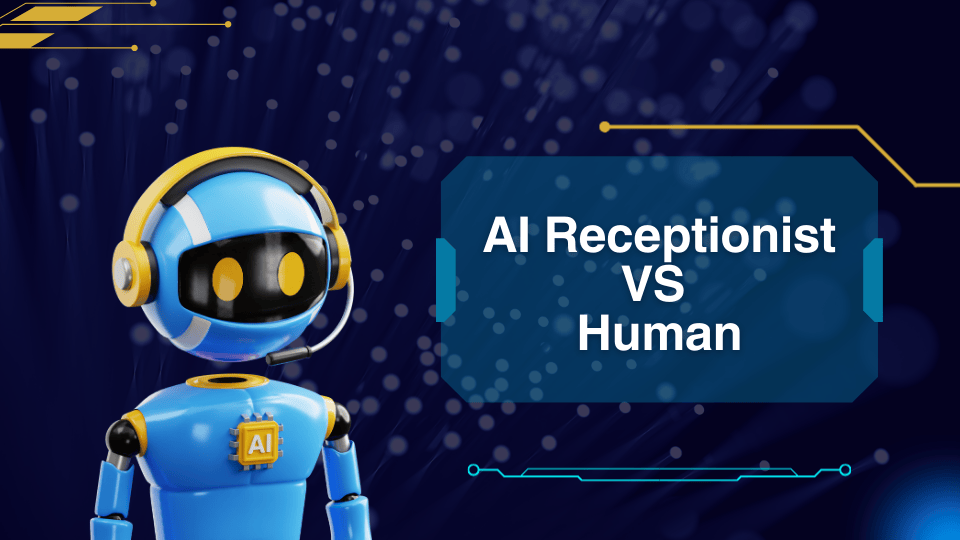
In today’s fast-moving business landscape, choosing between a human receptionist and an AI receptionist isn’t just an operational decision, it’s a strategic one that affects customer experience, efficiency, and cost.
Here’s a balanced look at both options, and how to think about what’s right for your business.
Why the receptionist role matters
Receptionists are often the first touchpoint for clients, customers, and visitors. They shape first impressions, protect your team’s time, and keep operations flowing by handling:
-
inbound calls and messages
-
appointment scheduling
-
basic FAQs and routing
-
visitor intake and follow-ups
A strong front desk function can raise trust and reduce friction. A weak one can create bottlenecks and missed opportunities.
Human receptionists: strengths and tradeoffs
Where humans shine
-
Personalized service: People naturally adjust tone and approach based on the situation.
-
Nuanced judgment: Humans handle gray areas and one-off exceptions really well.
-
Empathy: In sensitive industries (healthcare, legal, family services), a real person can matter a lot.
Where humans struggle
-
Limited coverage: Most can’t provide true 24/7 support without costly shift coverage.
-
Inconsistency or error: Even great employees have off days, miscommunications happen.
-
High overhead: Salary, benefits, training, and coverage for sick days/vacation add up quickly.
AI receptionists: strengths and limits
Where AI shines
-
Always on: AI can answer every call and message, day or night, weekends included.
-
Fast & consistent: Great for routine scheduling, FAQs, confirmations, and routing.
-
Custom workflows: You can train AI to follow your exact policies and handle specific scenarios.
-
Multilingual support: Helpful for serving diverse, growing communities.
-
Data visibility: Many platforms offer dashboards with transcripts, logs, and patterns you can learn from.
Where AI still has limits
-
Complex edge cases: Highly emotional or unusual situations may need a human.
-
“Human feel”: Even with good customization, AI may not replicate warmth in every interaction — though it’s improving rapidly.
A practical way to decide
Instead of framing it as AI vs. humans, many businesses are seeing success using AI as a first-line receptionist and humans as the escalation layer.
AI is ideal when:
-
most calls are scheduling or repeat questions
-
you miss inquiries after hours
-
you want predictable handling every time
-
you need to reduce admin load
Humans are essential when:
-
your calls are high-emotion or high-complexity
-
you rely on relationship-heavy communication
-
each inquiry is unique and requires interpretation
The real takeaway
AI receptionists aren’t about replacing people — they’re about removing bottlenecks. When routine front desk work is automated, teams get time back to focus on higher-value tasks, and customers get faster responses.
For many small and mid-sized businesses, that combination — round-the-clock availability + consistent service + lower overhead — can be a meaningful competitive advantage.



No comment