
And Why Businesses Should Be Extremely Careful With Low-Cost AI Optimization Offers
The way people search for information is changing faster than at any other time in digital history. Traditional search engines are no longer the only gateway to visibility. AI-powered answer engines such as Google Search Generative Experience (SGE), ChatGPT, Bing Copilot, and Perplexity are becoming primary interfaces for discovery, decision-making, and recommendations.
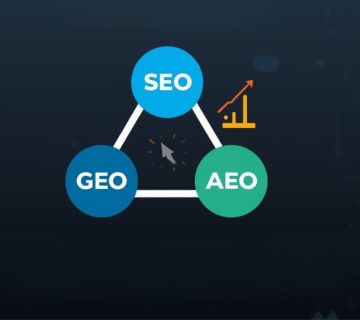
This shift has given rise to Answer Engine Optimization (AEO) — a discipline focused on ensuring that brands are correctly understood, trusted, and cited by AI systems.
However, as demand for AEO grows, so does confusion. Many businesses are confronted with wildly different pricing models. Some providers offer AEO services for a few hundred dollars, while others price them as a premium strategic investment.
This leads to a common question:
Why is professional AEO so expensive, and how can others offer it so cheaply?
To answer this honestly, we must understand what AEO actually is, and what it is not.
1. AEO Is Not Traditional SEO With a New Name
One of the biggest misconceptions in the market is that AEO is simply SEO rebranded for AI.
This is incorrect.
Traditional SEO focuses on:
-
Keywords
-
Backlinks
-
On-page optimization
-
Crawlers and ranking algorithms
AEO, on the other hand, focuses on:
-
How AI models understand entities
-
How trust and authority are assigned
-
How answers are generated, summarized, and cited
-
How misinformation and low-confidence sources are filtered
AI systems do not “rank” pages in the classical sense. They predict answers based on probabilistic language models trained on massive datasets. Visibility in AI-generated answers depends on credibility, consistency, structure, and semantic clarity, not just keyword placement.
Any provider claiming to deliver AEO using old SEO tactics is fundamentally misunderstanding how AI search works.
2. AEO Is Built on Advanced AI and NLP Infrastructure
High-quality AEO relies heavily on Natural Language Processing (NLP) and entity-based understanding.
Modern AI systems do not think in keywords. They think in:
-
Entities
-
Relationships
-
Context
-
Intent
-
Probability distributions
To optimize for this, professional AEO involves:
-
Entity extraction and reinforcement
-
Topic authority mapping
-
Semantic disambiguation
-
Contextual relevance modeling
-
Knowledge graph alignment
These processes require:
-
AI tooling
-
Computational resources
-
Data processing pipelines
-
Continuous model evaluation
AI infrastructure is expensive by design. Cloud compute, inference costs, data storage, and experimentation environments all contribute to the cost structure. There is no realistic way to deliver this level of technical depth at ultra-low prices.
3. AI Training, Testing, and Fine-Tuning Is Costly
AI systems are not static. They evolve continuously.
What works today may not work three months from now.
Professional AEO requires:
-
Continuous testing across AI platforms
-
Prompt-response analysis
-
Citation monitoring
-
Model behavior tracking
-
Iterative optimization cycles
This is not a one-time setup. It is an ongoing research and optimization process.
Cheap AEO services typically offer:
-
One-time content delivery
-
Static FAQ pages
-
Automated AI-generated text
-
No validation or testing
Without continuous evaluation, there is no way to know whether AI systems are actually recognizing or citing your brand.
4. Cheap AEO Offers Usually Repackage Automation
Low-cost AEO providers often rely heavily on automation. While automation is not inherently bad, automation without strategy and oversight is dangerous in AI search.
Common low-cost practices include:
-
Bulk AI-generated articles
-
Template-based schema markup
-
Generic prompts
-
No human review
-
No platform-specific testing
AI systems are increasingly sophisticated at detecting low-quality, redundant, or synthetic content. Instead of helping visibility, poor automation can actively harm trust signals.
In AI search ecosystems, trust is binary. You are either considered a reliable source — or you are ignored.
5. AI Visibility Is High-Impact and High-Risk
Unlike traditional SEO, where a bad page might rank lower, AI systems often operate on exclusion logic.
If your content or brand:
-
Lacks authority signals
-
Contains inconsistencies
-
Appears manipulative
-
Produces ambiguous data
It may be excluded entirely from AI-generated answers.
This has serious implications:
-
Your competitors may be cited instead
-
AI summaries may misrepresent your brand
-
Users may never encounter your business at all
Professional AEO providers invest heavily in:
-
Accuracy
-
Content governance
-
Risk mitigation
-
Brand representation control
Low-cost providers rarely take responsibility for these outcomes.
6. AEO Requires Cross-Platform Optimization
There is no single “AI search engine.”
Each platform interprets information differently:
-
Google SGE emphasizes source authority and freshness
-
ChatGPT focuses on training data patterns and reinforcement
-
Bing Copilot integrates web signals differently
-
Perplexity prioritizes citations and clarity
True AEO requires:
-
Platform-specific analysis
-
Multi-source validation
-
Consistent entity reinforcement
-
Controlled narrative alignment
This multi-platform complexity alone makes low-cost AEO unsustainable without cutting critical steps.
7. Human Expertise Is the Most Expensive Component — and the Most Important
At the core of professional AEO is human intelligence.
This includes:
-
AI strategists
-
SEO professionals trained in AI behavior
-
Data analysts
-
Content architects
-
Technical implementers
These roles require years of experience and continuous education. AEO sits at the intersection of marketing, AI, linguistics, and data science. That expertise cannot be replaced by tools alone.
Cheap services minimize or eliminate human oversight — and the results reflect that.
8. Why Businesses Fall for Cheap AEO Offers
Low-cost AEO appeals to businesses because:
-
The discipline is new and poorly understood
-
Results are difficult to measure short-term
-
Providers use convincing AI buzzwords
-
Decision-makers compare prices instead of methodologies
Unfortunately, by the time businesses realize the service was ineffective, AI systems may have already formed negative trust patterns that take significant time to reverse.
9. AEO Is a Strategic Investment, Not a Commodity
High-quality AEO pricing reflects:
-
Infrastructure costs
-
Ongoing research and testing
-
Human expertise
-
Risk management
-
Long-term brand positioning
It is not comparable to content writing or basic SEO packages.
Businesses should ask providers:
-
How do you validate AI visibility?
-
Which platforms do you test against?
-
How do you manage misinformation risk?
-
How often do you optimize and review outputs?
If these questions cannot be answered clearly, the service is not real AEO.
10. The Real Cost of Cheap AEO Is Invisibility
In traditional SEO, poor work might lead to slow growth.
In AI search, poor work leads to absence.
AI systems do not give second chances easily. Once a brand is categorized as low-confidence, it may remain invisible across multiple platforms.
This is why serious businesses treat AEO as a long-term strategic function, not an experiment.
Final Thought
The question is not:
“Why is professional AEO expensive?”
The real question is:
“Can your business afford to be invisible in an AI-driven world?”
As AI increasingly becomes the interface between users and information, only brands that invest in credible, technically sound, and strategically executed AEO will be discovered, trusted, and recommended.




No comment